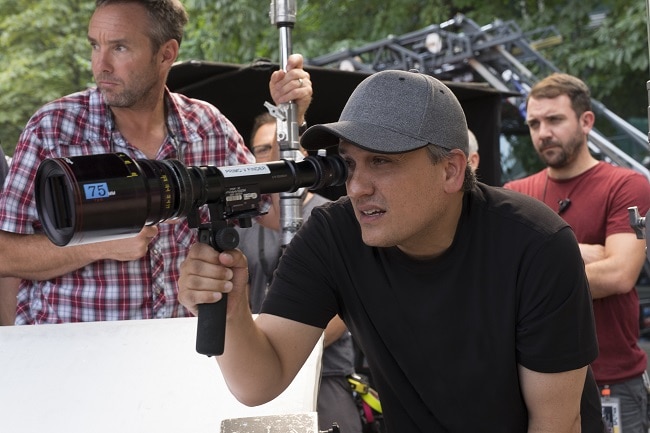
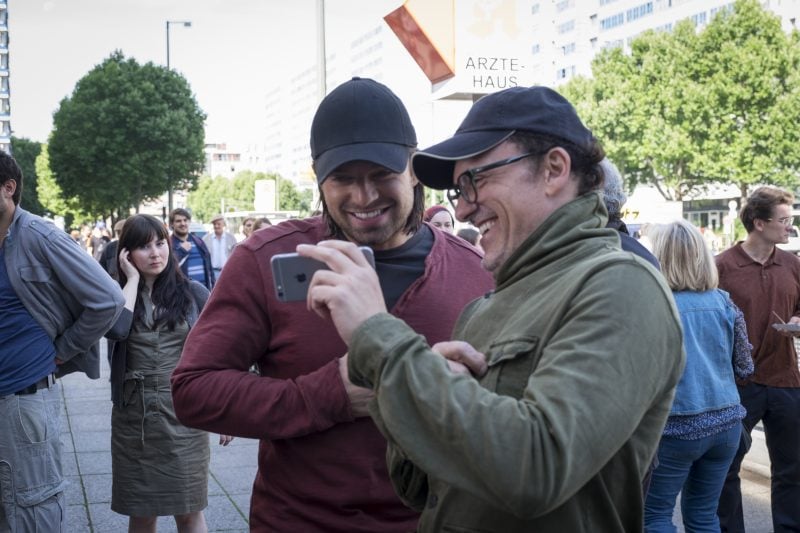
Anthony and Joe Russo (aka The Russo Brothers) have been Hollywood producers for quite some time. They are responsible for bringing some of the funniest comedies of the last decade to television, including Arrested Development and Happy Endings. Their foray into joint directing films exploded on the screen in the form of Captain America: The Winter Soldier. They brought a high voltage, edge of your seat style of filmmaking that gave the Marvel Cinematic Universe a shot in the arm. So, it was no surprise when they were asked to direct Captain America: Civil War and the next two Avengers movies.
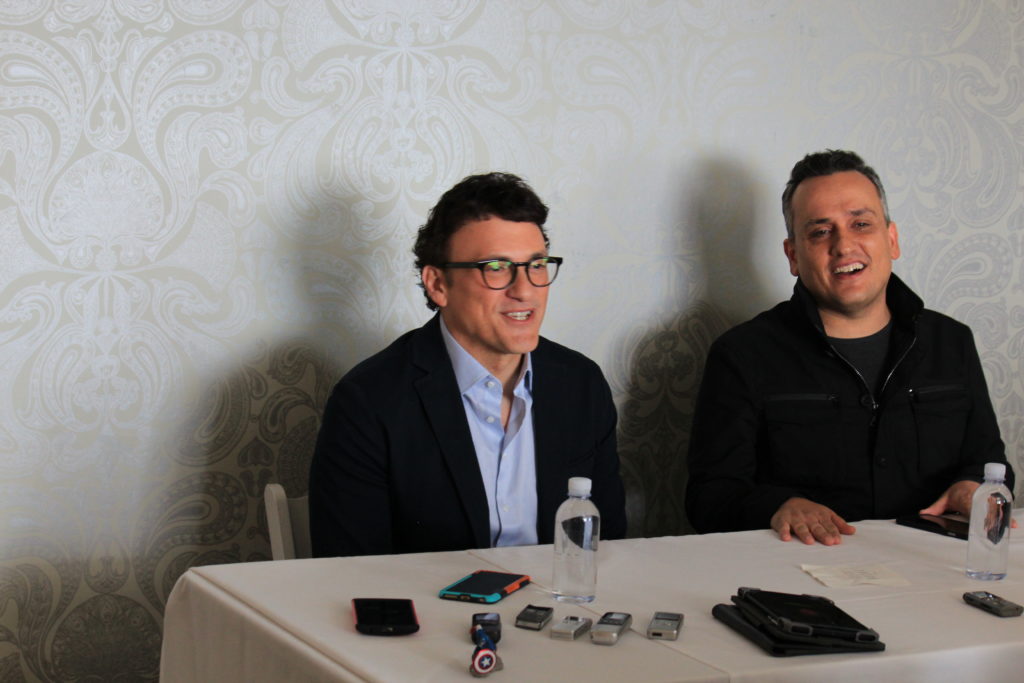
Interview with Anthony and Joe Russo  – Directors Captain America: Civil War
Was there any rivalry between the two of you when thinking out the process of the movie between Captain and Ironman?
Anthony: No, I don’t think there was rivalry. We both love both characters. Our process has always been very layered storytelling, so oftentimes, we’ll sort of step through the story from different character’s points of view. We’ll take a pass where it’ll just be all about this character. And then we’ll take a pass where it’ll be all about that character. So it’s become part of our process to really have moments where the whole movie belongs to somebody else, just one particular character for a moment as we’re thinking about the film from beginning to end.
The other thing about Joe and I is that we love characters who are exciting and fun and cool and all that but also are very human and vulnerable. We always look for that side of the character. So for us it was very important to find, ‘Where is Steve Rogers vulnerable? Where is Tony Stark vulnerable?’ And play to those in a way that would put them in conflict with one another.
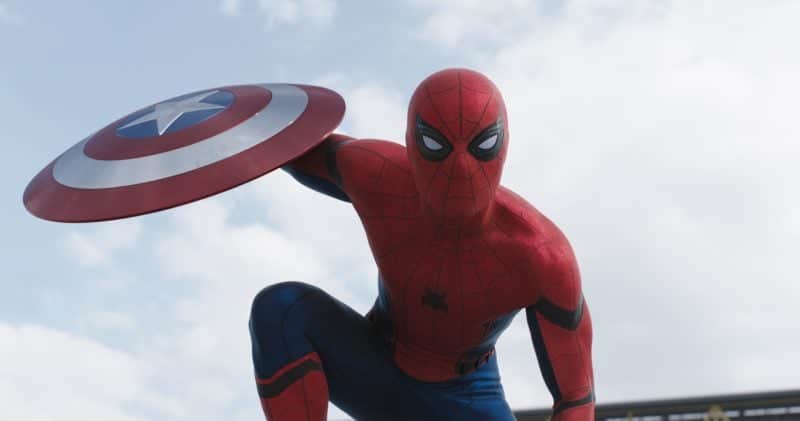
Spider-Man— Where did you find him and are you going to hold onto that kid?
Joe: Oh my God…doing everything we can to hang onto him.
Anthony : Yeah. We’re more in love with him than anybody.
Joe: There was a really exhaustive audition process for that role. You know, Spider-Man was a very important character to me as a kid. I was a big comic book collector. I still have my collection in my closet to my wife’s dismay. That character was my favorite character growing up. So to be able to interpret him on screen was like a dream come true. The things that I loved about him as a character when I was a kid were his vulnerability, his insecurity, his sense of humor. He was a smart ass kid but he was a kid. And we felt that, our interpretation of the character, we wanted to have an actor very close in age to Peter Parker. We also wanted to make sure that the actor had both the vulnerability and a confidence at the same time. And Tom Holland just embodied all of that. He brought a real authenticity. We really wanted him to feel like he was of New York today, right now and not about comic book New York. He was a kid living in Queens who had a certain energy to him.
What was your vision going into this film?
Anthony: You can’t do a movie called Captain America without thinking about the politics of it. It’s at the center of the character, who the character is from as inception. So while there is still elements of the political thriller that carries us forward and even launches us into this movie, we always thought about this movie as a psychological thriller. That shift was very important to us because you know the heart of this movie for us is the relationship and the conflict between Captain America, Bucky Barnes and Tony Stark.
It’s what has to play out between those three characters in the climax of the film that we are driving towards as storytellers for the whole movie. We are setting up that sort of awful reveal and that awful tension that plays out between those characters in that moment. So that’s why we always thought of it as a psychological thriller in terms of what happens to these characters on a psychological and emotional level. And, so you know, we were thinking about movies in that vain. One of the movies we talked about a lot was David Fincher’s Seven. We talked about Brian de Palma’s Blowout a lot. These are movies that have had this similar trajectory where the characters are on this sort of road to something very awful, and what is going to happen to them when they get there? How are they going to react as characters? So that was the heart of the film for us this time around.
When taking stories from the comic books, and so many fans are loyal to these comic books, how are you able to translate part of that story in keeping with the comic books and then deciding to kind of go away from that?
Joe: As a diehard comic book fan I’m not interested in seeing a straight interpretation of a comic book. I already know the story; so why would I go see the movie? Film is a very different medium then comic books. We have 2 ½ hours to tell a story, and we can only put out one of those movies once a year, every two years to move these characters forward. So we have to make choices that are servicing the storytelling that is built up in the Marvel cinematic universe.
What was the hardest scene to shoot?
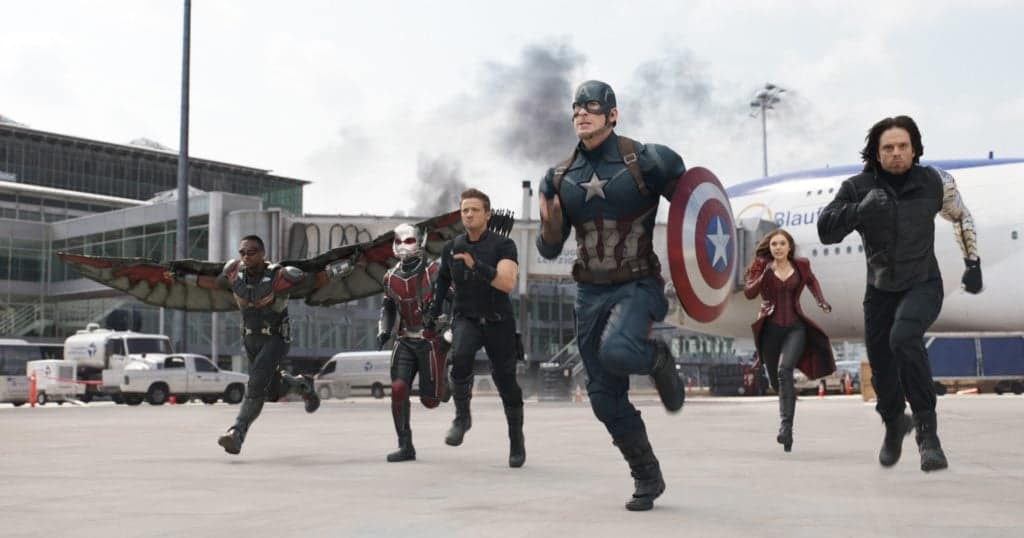
Anthony: That airport scene was about the biggest thing we’ve ever attempted to do. It was almost like a mini movie within the movie. It took months and months and months to prepare that sequence.
Joe: And it was 110 in Atlanta.
Anthony: We would take the temperature of the asphalt we were standing on and it was close to 125. Guys like Chris Evans and Chadwick Boseman in full costumes standing out there. Poor Paul Bettany, I remember one day where he was hanging on wires out there in full vision outfit. And he moved his arm in a way that his sleeve opened up and sweat just squirt.
© Marvel 2016
The most bad-ass scene?
Anthony: The Romania sequence was really thrilling- to be in that tunnel. We love cars, we love car chases. Also, we love fighting, hand-to-hand fighting which is what we focused on in the Winter Soldier with Captain America. So to bring him forward and have a fight with him and Bucky Barnes fighting their way out of the apartment through the stairwell; that was another thing that’s very bad ass for us.
The love story with Captain America and Agent 13 — are you looking forward to furthering that and sharing more of that with the audience?
Joe: Yea, we’re sitting down and breaking into new war stories now and might be the next time that you see a lot of these characters on screen. Where do these characters go? Where do we want them to be? The interesting thing about Civil War for us is the fact that we knew we were going to be doing the infinity war films and there’s really a connection between the Winter Soldier, Civil War and the infinity war films. It’s an arch and that arch is a part of this family. What we thought would be most interesting heading into infinity war would be putting these characters in the most complicated position they could possibly be in to the face of the greatest threat that they’re ever going to face. Can they pull together? Can they forgive each other? Can they ever work together again? So, I think you’ll see some fracturing as we move forward. It’s certainly going to carry forward. In the fracturing, you will see camps of characters dealing with each other and moving forward. Certainly Captain America and Agent 13 will be a part of that.
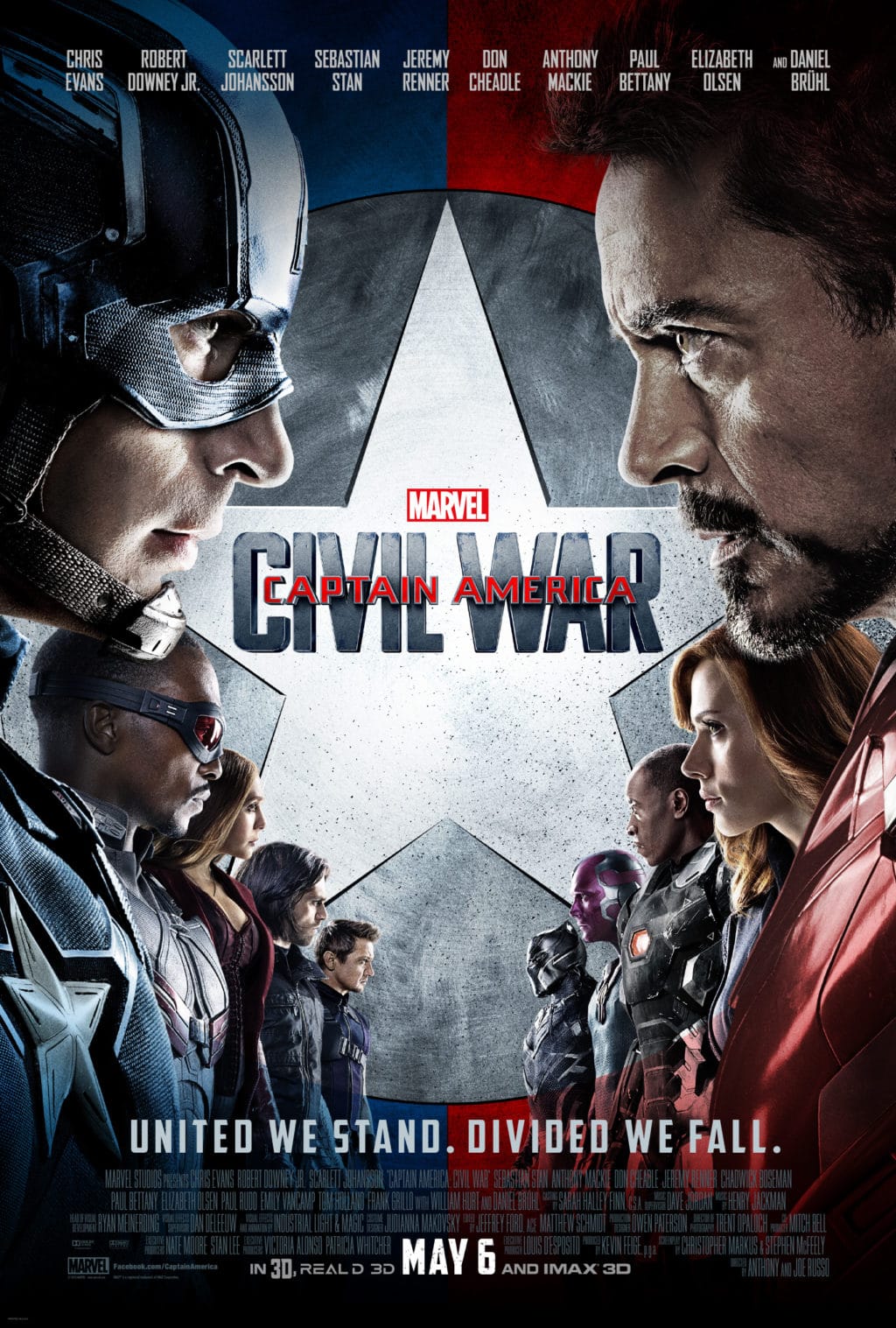
Captain America: Civil War Opens in Theaters Everywhere May 6!
Photo Credit: Coralie Seright. Special thanks to Disney Studios for hosting me for the Captain America: Civil War press event.